How Shopify Stores Can Rank in ChatGPT

ChatGPT is becoming a product discovery channel for Shopify stores. Learn how to optimize your catalog for AI-driven recommendations.
March 18, 2026
Frank
Latest
Shopify

How Shopify Stores Can Rank in ChatGPT

For the past decade, product discovery started with Google. Type a query, get organic results and ads, click through to a store. That model is still dominant - but a new discovery channel is emerging faster than most merchants realize.

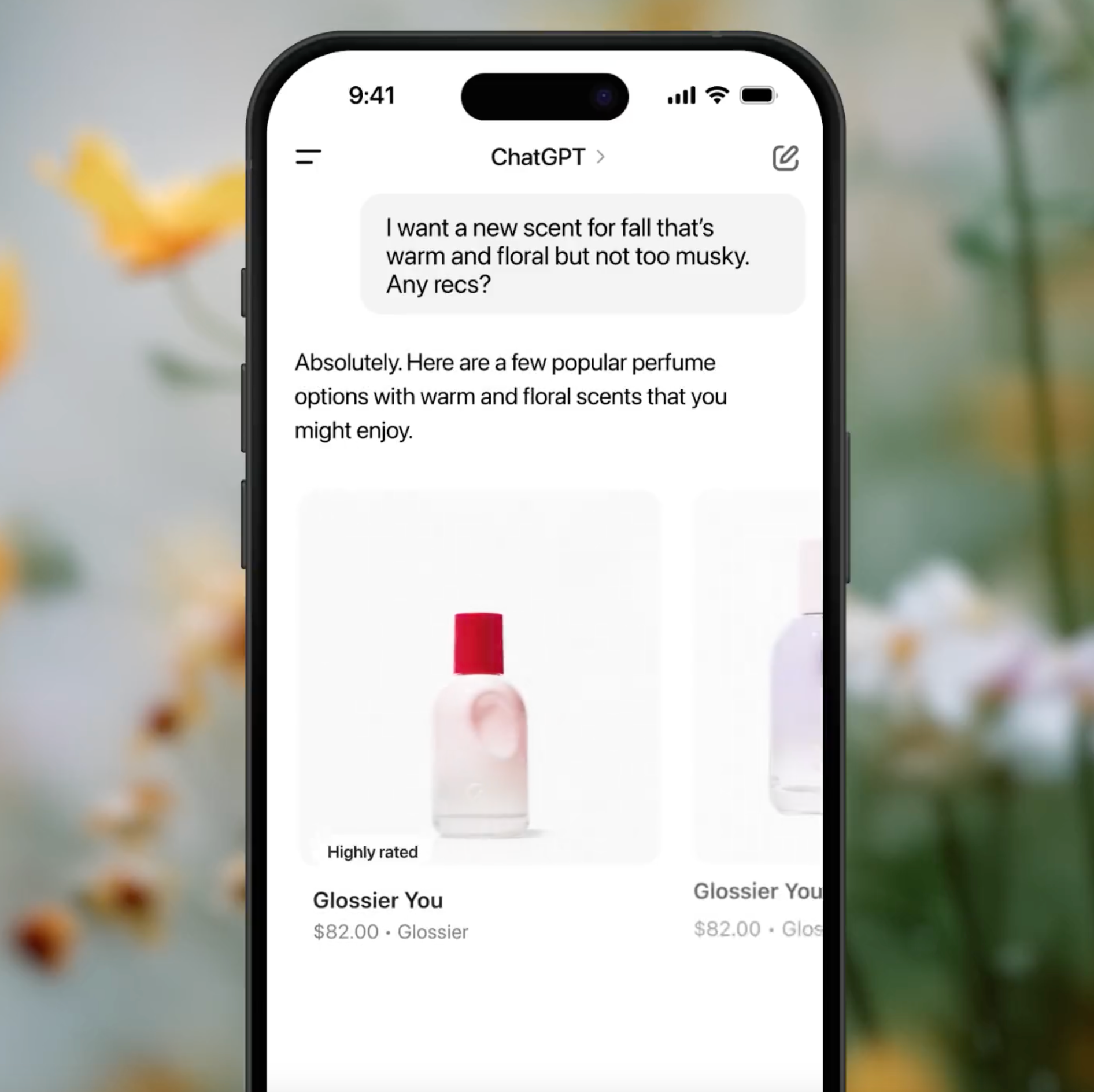
Shoppers are increasingly asking ChatGPT: "What's the best [product] for [use case]?" And ChatGPT is recommending specific products from specific stores. The stores that appear in those recommendations are capturing traffic that bypasses Google entirely.

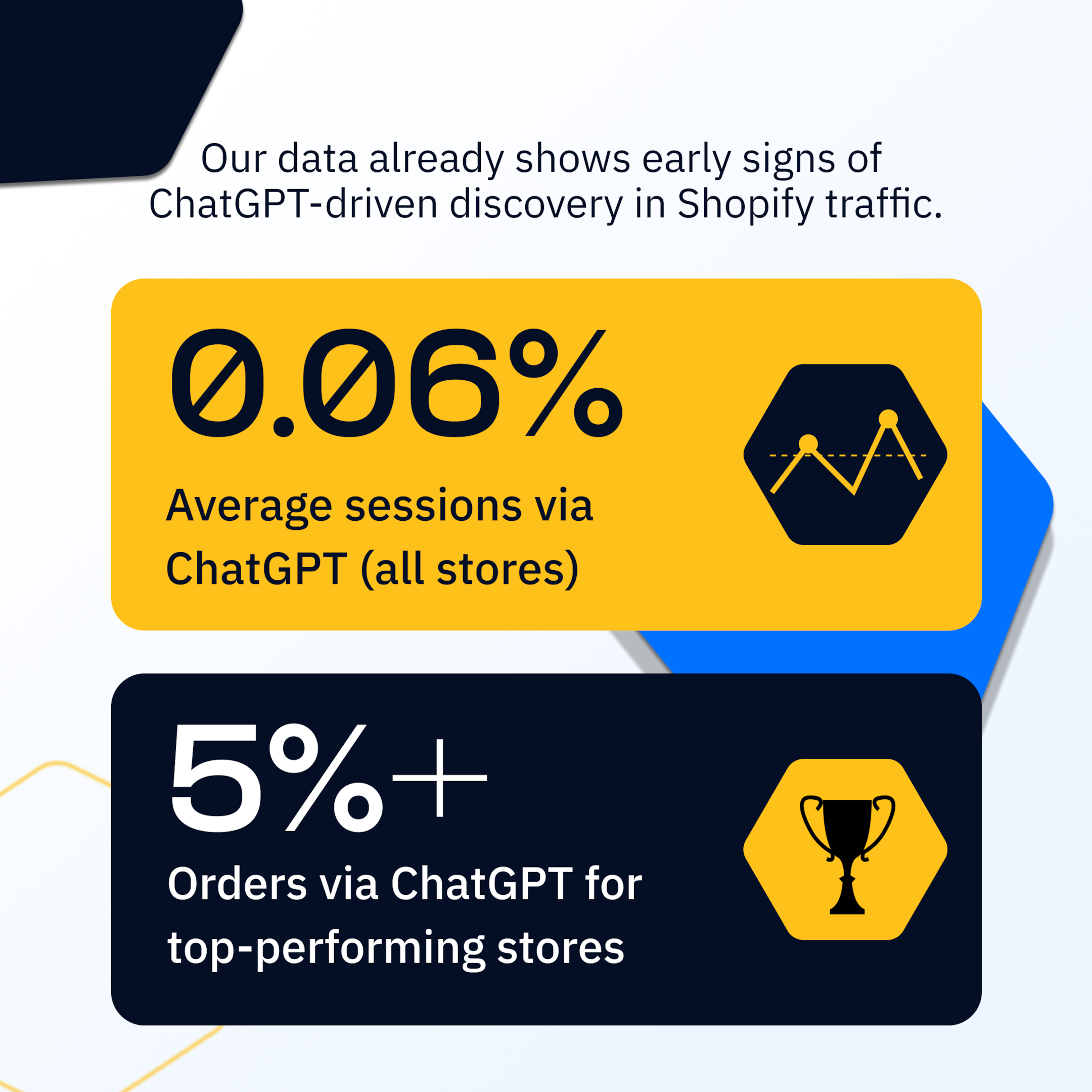
Shopify has partnered directly with OpenAI on "Buy with ChatGPT" - an integration that lets ChatGPT browse Shopify catalogs and complete purchases within the platform. Currently, ChatGPT drives approximately 0.06% of traffic across tracked Shopify merchants. But top-performing stores already see 5% or more of their orders coming from AI-driven discovery. The trajectory looks like early TikTok adoption in 2019 - small now, potentially significant soon.

This guide covers what determines ChatGPT product visibility, five concrete optimization steps, and why data accuracy is the foundation of AI-driven discoverability.

How ChatGPT Product Discovery Works

ChatGPT doesn't discover your products by crawling your website the way Google does. The "Buy with ChatGPT" integration works through a direct API connection between ChatGPT and Shopify's Commerce APIs:

  1. User query: A shopper asks ChatGPT for a product recommendation ("What's the best running shoe under €100 for wide feet?")

  2. API retrieval: ChatGPT queries Shopify's Catalog API to retrieve structured product data from connected stores

  3. Recommendation generation: ChatGPT uses the product data - descriptions, specifications, reviews, pricing - to formulate a recommendation

  4. In-chat checkout: If the shopper wants to purchase, they can complete the transaction within ChatGPT via Stripe-powered checkout

The critical difference from Google: ChatGPT retrieves product data through structured data APIs, not web crawling. This means your product data quality - the information in your Shopify product records - directly determines whether ChatGPT can accurately recommend your products.

Good product descriptions that answer the right questions → ChatGPT can match your products to relevant queries → Your store appears in recommendations. Thin product descriptions without specifics → ChatGPT can't confidently match your products → Your store doesn't appear.


Why Shopify Catalog Quality Determines ChatGPT Visibility

Google ranks web pages based on content quality, backlinks, and user signals. ChatGPT recommends products based on structured data quality.
The ranking factors are different:

  • Specificity: Does your product description answer the specific questions a buyer might ask? ("Is this for wide feet?" "What's the weight?" "Is it machine washable?")

  • Completeness: Are all variant attributes filled in? Are GTINs, brands, and categories present?

  • Accuracy: Are prices, inventory levels, and product specifications current?

  • Consistency: Do your product titles and descriptions match across your Shopify store, Google Shopping feed, and other connected channels?

A product with a sparse description ("Running shoe, available in 3 colors") is nearly invisible to AI-driven discovery. A product with a detailed, specification-rich description that directly answers buyer questions ("Lightweight running shoe (220g) with extra-wide toe box (EE width), designed for neutral to mild overpronators, machine washable...") gives ChatGPT what it needs to recommend your product for relevant queries.


Step 1: Optimize Your Shopify Product Catalog

Start with the product data that's directly retrievable by ChatGPT via Shopify's APIs.
gpt-bases discovery

Product descriptions Write descriptions that answer the specific questions buyers ask before purchasing. Think about the queries that would lead to your product: "best [product] for [use case]," "[product] for [specific condition]," "lightweight [product] under [price]." Your description should contain answers to these questions explicitly.

Avoid generic descriptions that could apply to any product in your category. Specificity is what enables AI matching.

Complete variant data Every variant (size, color, material) should have complete, accurate data - not just the variant identifier but the specifications relevant to buyers. If you sell running shoes, size alone isn't enough - width, weight, drop height, and cushioning category are the attributes buyers ask about.

Taxonomy alignment Align your product categories with Google's Product Taxonomy. This is the standard category structure used across commerce data exchanges and is the reference point Shopify uses for structured data. Correct categorization ensures your products appear in the right recommendation context.

GTIN and brand data Global Trade Item Numbers (GTINs/EANs/UPCs) and accurate brand names enable matching across channels. If someone asks ChatGPT about a specific brand, your products only appear if your brand data is correctly populated.

High-quality images ChatGPT can interpret images. Product images that clearly show the product from multiple angles, in use, and with scale reference improve the AI's ability to recommend your product accurately for visual queries.


Step 2: Build Brand Trust Signals

ChatGPT's recommendation model isn't purely product-data-driven - it also considers signals about your store's credibility and trustworthiness.
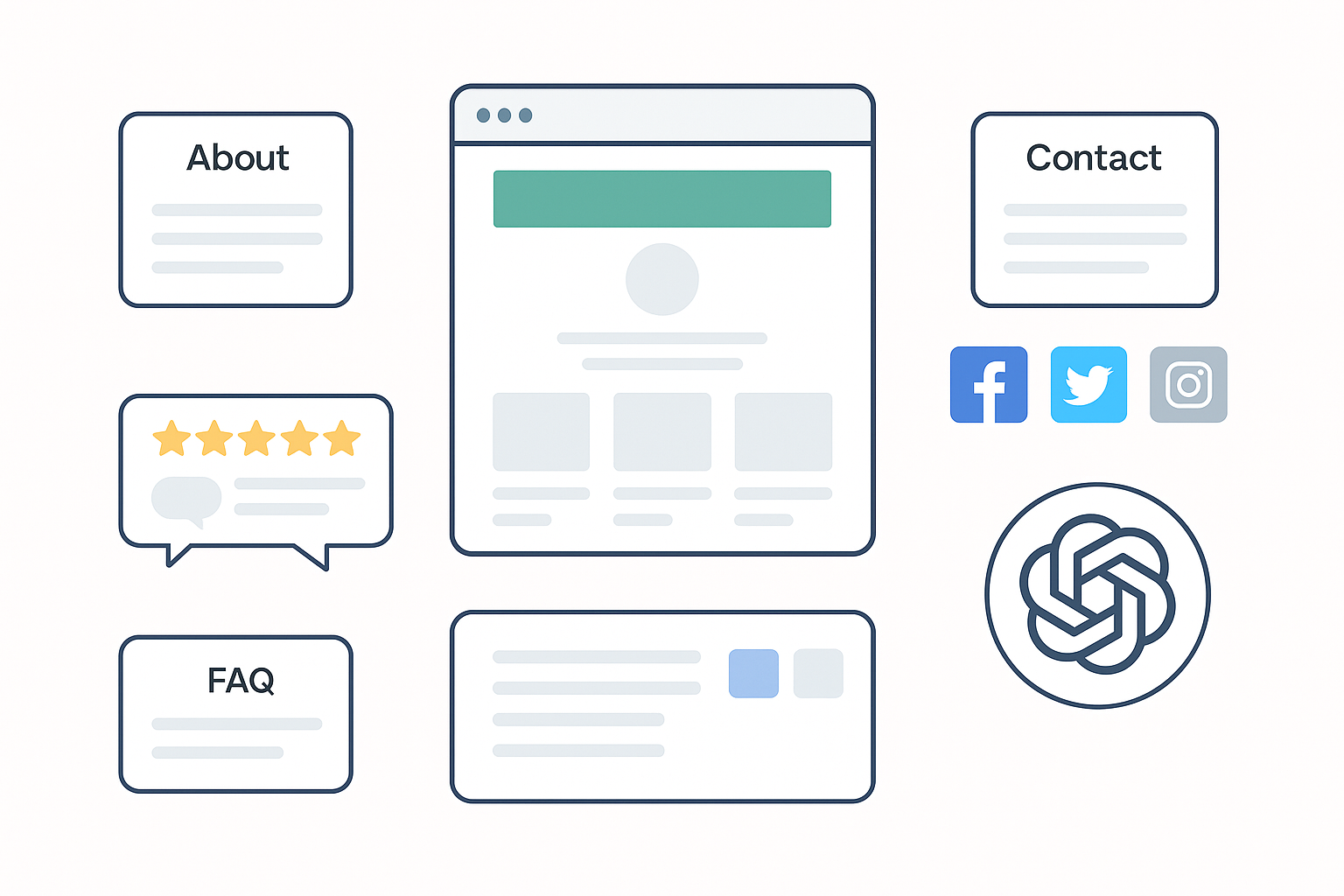
Complete policy and information pages Ensure your About page, Contact page, Shipping policy, and Return policy are present, complete, and clearly written. These pages signal that your store is legitimate and that the purchase experience is low-risk. AI systems trained on web content associate complete, accurate policy pages with trustworthy stores.

Consistent meta information Your store's title tags, meta descriptions, and structured data (Schema.org) should be consistent and accurate. These are signals that tell AI systems what your store is and what it sells.

Visible, crawlable reviews Customer reviews are high-value content for AI-driven discovery. They contain the natural language that real buyers use to describe products - the same language prospective buyers use in queries. Reviews on your product pages (not locked behind JavaScript that prevents crawling) contribute to your AI discoverability.

FAQ sections on product pages Frequently Asked Questions directly address the buyer questions that become ChatGPT queries. A FAQ that answers "Is this suitable for sensitive skin?", "How long does delivery take?", and "Can I return this if it doesn't fit?" gives ChatGPT directly usable content for recommendation responses.


Step 3: Maintain Feed Consistency Across Channels

ChatGPT's product data retrieval uses Shopify's Catalog API, but the broader AI discovery ecosystem (which includes Bing/Copilot, Google's AI Overviews, and other AI shopping tools) uses your Google Shopping feed, schema markup, and product catalog data across multiple sources.

Shopify Knowledge Base app

Inconsistencies across these sources reduce AI confidence in your product data.

Automate price and inventory updates Stale pricing or out-of-stock products appearing in ChatGPT recommendations create a poor buyer experience - and AI systems deprioritize stores with inconsistent accuracy. Ensure your Shopify inventory management is live and that price updates propagate to connected feeds immediately.

Consistent product identifiers across channels Your SKUs, GTINs, and product titles should match across Shopify, Google Shopping, and any other connected commerce channels. Cross-channel consistency is a reliability signal.

Regular catalog audits Monthly audit: identify products with thin descriptions, missing variant data, or outdated specifications. Prioritize your highest-revenue products for catalog enrichment first.


Step 4: Use Shopify's Knowledge Base App

Shopify offers a Knowledge Base app (available in the Shopify App Store) specifically designed to help merchants optimize for AI-driven discovery and respond to how AI systems interact with their store data.
What the Knowledge Base app tracks:

  • How frequently each of your products appears in AI-generated recommendations

  • What questions shoppers are asking AI systems about your brand

  • Suggested FAQs based on actual buyer queries that relate to your products

  • Gaps in your product data that are limiting AI discoverability

How to use it: Review the app's suggested FAQs regularly and implement those that address genuine buyer questions. Monitor which products are appearing in AI recommendations and use that data to identify which product descriptions are working and which need improvement.

Track the "questions about your brand" section - these are actual queries about your products and policies that AI systems are handling. If buyers are asking questions that your product pages don't answer, add that content.


Step 5: Test and Monitor Continuously

AI-driven discovery is evolving rapidly. What works today may change as ChatGPT updates its commerce integration and Shopify's API capabilities expand.

Test your own discoverability Regularly query ChatGPT with the search terms your buyers would use: "best [your product category] for [your use case]," "where to buy [your product type] in [your market]." Note whether your store appears in recommendations. If it doesn't appear for queries where it should, identify the product data gaps that might explain the absence.

Monitor AI traffic in your analytics In GA4, create a segment for traffic from ChatGPT (source: chatgpt.com or openai.com). Track this segment month-over-month. As ChatGPT's commerce integration expands, this traffic source should grow - particularly for stores with well-optimized catalogs.

TrackBee's UTM attribution captures ChatGPT referral traffic in Shopify order records, allowing you to track actual revenue attributed to AI-driven discovery, not just sessions.

Update catalog based on performance data Monthly: compare your Knowledge Base app data against your actual product performance. Products that appear frequently in AI recommendations but have low conversion rates may have good discoverability but weak product pages - optimize the page. Products with high conversion rates but low AI discovery may need catalog enrichment.


Why Tracking Data Accuracy Matters for AI Visibility

There's a less obvious connection between your tracking infrastructure and AI-driven discoverability: data consistency.

ChatGPT's commerce integration evaluates product data across multiple signals. Stores where product pricing, inventory, and order data are consistent across Shopify, ad platforms, and analytics systems present more reliable data to AI systems than stores with fragmented, inconsistent data.

Beyond this, as AI-powered ad platforms (Meta Advantage+, Google Performance Max) increasingly drive traffic, the stores with the most complete and accurate conversion data will receive better algorithm optimization - bringing more traffic to the right products. With Consent Mode V2 enforcement, iOS 26 privacy tightening, and Google's Privacy Sandbox abandoned, the gap between stores with server-side tracking and those without is widening. That traffic, measured accurately, contributes to the review volume and conversion signals that feed AI recommendation systems.

TrackBee's server-side tracking ensures your conversion data - from every channel - is captured completely and consistently. Complete data means complete signal quality for every algorithm that touches your store's performance, including emerging AI commerce systems.

See: Full-funnel tracking for Shopify: how does it work?.


Frequently Asked Questions

Does every Shopify store have access to ChatGPT product discovery? The "Buy with ChatGPT" integration is being rolled out by Shopify in partnership with OpenAI. Availability depends on your Shopify plan and the regions where the integration is active. Check your Shopify Admin for current availability.

How is ChatGPT discovery different from Google Shopping? Google Shopping requires explicit campaign setup, bid management, and ongoing optimization. ChatGPT discovery is more organic - it's driven by catalog data quality and product-query relevance rather than ad spend. A well-optimized catalog can appear in ChatGPT recommendations without any ad investment. The trade-off: you have less direct control over when and how your products appear.

Should I change my SEO strategy because of AI discovery? AI discovery complements rather than replaces traditional SEO. Google still drives the majority of organic product discovery. The optimization practices for AI discoverability (complete product data, specific descriptions, consistent information) align well with good SEO practice. Investing in catalog quality serves both channels.

How do I measure revenue from ChatGPT specifically? In GA4, monitor the chatgpt.com referral source. In Shopify, orders with chatgpt.com as the referrer are attributable to direct ChatGPT-driven purchases. TrackBee's UTM attribution captures this in your order data for cross-channel analysis.

What's the timeline for ChatGPT becoming a meaningful traffic source? Currently minimal (0.06% average across Shopify merchants), but growing. The comparison to TikTok's early adoption (2019) suggests that early optimizers will have a significant advantage as the channel scales. The catalog optimization work required is a one-time investment in product data quality - it doesn't need to be redone when the channel grows.


Optimize Now, Benefit as AI Commerce Scales

ChatGPT-driven product discovery is early stage. The stores appearing in recommendations today are doing so because their catalog data is complete, specific, and accurate - not because they've found a growth hack. The optimization work required is fundamentally the same work that improves your Google Shopping visibility and your on-site conversion rate: better product data.

The difference is timing. Optimizing your catalog for AI discoverability now, when ChatGPT commerce is nascent, positions you ahead of the curve rather than catching up.

In this article
Boost Your Revenue
Track Missing Conversion Data
Lorem Ipsum

Boost Your Revenue

Track & Enrich
Missing Conversion Data

Try for free
Share this:

For the past decade, product discovery started with Google. Type a query, get organic results and ads, click through to a store. That model is still dominant - but a new discovery channel is emerging faster than most merchants realize.

Shoppers are increasingly asking ChatGPT: "What's the best [product] for [use case]?" And ChatGPT is recommending specific products from specific stores. The stores that appear in those recommendations are capturing traffic that bypasses Google entirely.

Shopify has partnered directly with OpenAI on "Buy with ChatGPT" - an integration that lets ChatGPT browse Shopify catalogs and complete purchases within the platform. Currently, ChatGPT drives approximately 0.06% of traffic across tracked Shopify merchants. But top-performing stores already see 5% or more of their orders coming from AI-driven discovery. The trajectory looks like early TikTok adoption in 2019 - small now, potentially significant soon.

This guide covers what determines ChatGPT product visibility, five concrete optimization steps, and why data accuracy is the foundation of AI-driven discoverability.

How ChatGPT Product Discovery Works

ChatGPT doesn't discover your products by crawling your website the way Google does. The "Buy with ChatGPT" integration works through a direct API connection between ChatGPT and Shopify's Commerce APIs:

  1. User query: A shopper asks ChatGPT for a product recommendation ("What's the best running shoe under €100 for wide feet?")

  2. API retrieval: ChatGPT queries Shopify's Catalog API to retrieve structured product data from connected stores

  3. Recommendation generation: ChatGPT uses the product data - descriptions, specifications, reviews, pricing - to formulate a recommendation

  4. In-chat checkout: If the shopper wants to purchase, they can complete the transaction within ChatGPT via Stripe-powered checkout

The critical difference from Google: ChatGPT retrieves product data through structured data APIs, not web crawling. This means your product data quality - the information in your Shopify product records - directly determines whether ChatGPT can accurately recommend your products.

Good product descriptions that answer the right questions → ChatGPT can match your products to relevant queries → Your store appears in recommendations. Thin product descriptions without specifics → ChatGPT can't confidently match your products → Your store doesn't appear.


Why Shopify Catalog Quality Determines ChatGPT Visibility

Google ranks web pages based on content quality, backlinks, and user signals. ChatGPT recommends products based on structured data quality.

The ranking factors are different:

  • Specificity: Does your product description answer the specific questions a buyer might ask? ("Is this for wide feet?" "What's the weight?" "Is it machine washable?")

  • Completeness: Are all variant attributes filled in? Are GTINs, brands, and categories present?

  • Accuracy: Are prices, inventory levels, and product specifications current?

  • Consistency: Do your product titles and descriptions match across your Shopify store, Google Shopping feed, and other connected channels?

A product with a sparse description ("Running shoe, available in 3 colors") is nearly invisible to AI-driven discovery. A product with a detailed, specification-rich description that directly answers buyer questions ("Lightweight running shoe (220g) with extra-wide toe box (EE width), designed for neutral to mild overpronators, machine washable...") gives ChatGPT what it needs to recommend your product for relevant queries.


Step 1: Optimize Your Shopify Product Catalog

Start with the product data that's directly retrievable by ChatGPT via Shopify's APIs.

gpt-bases discovery

Product descriptions Write descriptions that answer the specific questions buyers ask before purchasing. Think about the queries that would lead to your product: "best [product] for [use case]," "[product] for [specific condition]," "lightweight [product] under [price]." Your description should contain answers to these questions explicitly.

Avoid generic descriptions that could apply to any product in your category. Specificity is what enables AI matching.

Complete variant data Every variant (size, color, material) should have complete, accurate data - not just the variant identifier but the specifications relevant to buyers. If you sell running shoes, size alone isn't enough - width, weight, drop height, and cushioning category are the attributes buyers ask about.

Taxonomy alignment Align your product categories with Google's Product Taxonomy. This is the standard category structure used across commerce data exchanges and is the reference point Shopify uses for structured data. Correct categorization ensures your products appear in the right recommendation context.

GTIN and brand data Global Trade Item Numbers (GTINs/EANs/UPCs) and accurate brand names enable matching across channels. If someone asks ChatGPT about a specific brand, your products only appear if your brand data is correctly populated.

High-quality images ChatGPT can interpret images. Product images that clearly show the product from multiple angles, in use, and with scale reference improve the AI's ability to recommend your product accurately for visual queries.


Step 2: Build Brand Trust Signals

ChatGPT's recommendation model isn't purely product-data-driven - it also considers signals about your store's credibility and trustworthiness.

Complete policy and information pages Ensure your About page, Contact page, Shipping policy, and Return policy are present, complete, and clearly written. These pages signal that your store is legitimate and that the purchase experience is low-risk. AI systems trained on web content associate complete, accurate policy pages with trustworthy stores.

Consistent meta information Your store's title tags, meta descriptions, and structured data (Schema.org) should be consistent and accurate. These are signals that tell AI systems what your store is and what it sells.

Visible, crawlable reviews Customer reviews are high-value content for AI-driven discovery. They contain the natural language that real buyers use to describe products - the same language prospective buyers use in queries. Reviews on your product pages (not locked behind JavaScript that prevents crawling) contribute to your AI discoverability.

FAQ sections on product pages Frequently Asked Questions directly address the buyer questions that become ChatGPT queries. A FAQ that answers "Is this suitable for sensitive skin?", "How long does delivery take?", and "Can I return this if it doesn't fit?" gives ChatGPT directly usable content for recommendation responses.


Step 3: Maintain Feed Consistency Across Channels

ChatGPT's product data retrieval uses Shopify's Catalog API, but the broader AI discovery ecosystem (which includes Bing/Copilot, Google's AI Overviews, and other AI shopping tools) uses your Google Shopping feed, schema markup, and product catalog data across multiple sources.

Shopify Knowledge Base app

Inconsistencies across these sources reduce AI confidence in your product data.

Automate price and inventory updates Stale pricing or out-of-stock products appearing in ChatGPT recommendations create a poor buyer experience - and AI systems deprioritize stores with inconsistent accuracy. Ensure your Shopify inventory management is live and that price updates propagate to connected feeds immediately.

Consistent product identifiers across channels Your SKUs, GTINs, and product titles should match across Shopify, Google Shopping, and any other connected commerce channels. Cross-channel consistency is a reliability signal.

Regular catalog audits Monthly audit: identify products with thin descriptions, missing variant data, or outdated specifications. Prioritize your highest-revenue products for catalog enrichment first.


Step 4: Use Shopify's Knowledge Base App

Shopify offers a Knowledge Base app (available in the Shopify App Store) specifically designed to help merchants optimize for AI-driven discovery and respond to how AI systems interact with their store data.

What the Knowledge Base app tracks:

  • How frequently each of your products appears in AI-generated recommendations

  • What questions shoppers are asking AI systems about your brand

  • Suggested FAQs based on actual buyer queries that relate to your products

  • Gaps in your product data that are limiting AI discoverability

How to use it: Review the app's suggested FAQs regularly and implement those that address genuine buyer questions. Monitor which products are appearing in AI recommendations and use that data to identify which product descriptions are working and which need improvement.

Track the "questions about your brand" section - these are actual queries about your products and policies that AI systems are handling. If buyers are asking questions that your product pages don't answer, add that content.


Step 5: Test and Monitor Continuously

AI-driven discovery is evolving rapidly. What works today may change as ChatGPT updates its commerce integration and Shopify's API capabilities expand.

Test your own discoverability Regularly query ChatGPT with the search terms your buyers would use: "best [your product category] for [your use case]," "where to buy [your product type] in [your market]." Note whether your store appears in recommendations. If it doesn't appear for queries where it should, identify the product data gaps that might explain the absence.

Monitor AI traffic in your analytics In GA4, create a segment for traffic from ChatGPT (source: chatgpt.com or openai.com). Track this segment month-over-month. As ChatGPT's commerce integration expands, this traffic source should grow - particularly for stores with well-optimized catalogs.

TrackBee's UTM attribution captures ChatGPT referral traffic in Shopify order records, allowing you to track actual revenue attributed to AI-driven discovery, not just sessions.

Update catalog based on performance data Monthly: compare your Knowledge Base app data against your actual product performance. Products that appear frequently in AI recommendations but have low conversion rates may have good discoverability but weak product pages - optimize the page. Products with high conversion rates but low AI discovery may need catalog enrichment.


Why Tracking Data Accuracy Matters for AI Visibility

There's a less obvious connection between your tracking infrastructure and AI-driven discoverability: data consistency.

ChatGPT's commerce integration evaluates product data across multiple signals. Stores where product pricing, inventory, and order data are consistent across Shopify, ad platforms, and analytics systems present more reliable data to AI systems than stores with fragmented, inconsistent data.

Beyond this, as AI-powered ad platforms (Meta Advantage+, Google Performance Max) increasingly drive traffic, the stores with the most complete and accurate conversion data will receive better algorithm optimization - bringing more traffic to the right products. With Consent Mode V2 enforcement, iOS 26 privacy tightening, and Google's Privacy Sandbox abandoned, the gap between stores with server-side tracking and those without is widening. That traffic, measured accurately, contributes to the review volume and conversion signals that feed AI recommendation systems.

TrackBee's server-side tracking ensures your conversion data - from every channel - is captured completely and consistently. Complete data means complete signal quality for every algorithm that touches your store's performance, including emerging AI commerce systems.

See: Full-funnel tracking for Shopify: how does it work?.


Frequently Asked Questions

Does every Shopify store have access to ChatGPT product discovery? The "Buy with ChatGPT" integration is being rolled out by Shopify in partnership with OpenAI. Availability depends on your Shopify plan and the regions where the integration is active. Check your Shopify Admin for current availability.

How is ChatGPT discovery different from Google Shopping? Google Shopping requires explicit campaign setup, bid management, and ongoing optimization. ChatGPT discovery is more organic - it's driven by catalog data quality and product-query relevance rather than ad spend. A well-optimized catalog can appear in ChatGPT recommendations without any ad investment. The trade-off: you have less direct control over when and how your products appear.

Should I change my SEO strategy because of AI discovery? AI discovery complements rather than replaces traditional SEO. Google still drives the majority of organic product discovery. The optimization practices for AI discoverability (complete product data, specific descriptions, consistent information) align well with good SEO practice. Investing in catalog quality serves both channels.

How do I measure revenue from ChatGPT specifically? In GA4, monitor the chatgpt.com referral source. In Shopify, orders with chatgpt.com as the referrer are attributable to direct ChatGPT-driven purchases. TrackBee's UTM attribution captures this in your order data for cross-channel analysis.

What's the timeline for ChatGPT becoming a meaningful traffic source? Currently minimal (0.06% average across Shopify merchants), but growing. The comparison to TikTok's early adoption (2019) suggests that early optimizers will have a significant advantage as the channel scales. The catalog optimization work required is a one-time investment in product data quality - it doesn't need to be redone when the channel grows.


Optimize Now, Benefit as AI Commerce Scales

ChatGPT-driven product discovery is early stage. The stores appearing in recommendations today are doing so because their catalog data is complete, specific, and accurate - not because they've found a growth hack. The optimization work required is fundamentally the same work that improves your Google Shopping visibility and your on-site conversion rate: better product data.

The difference is timing. Optimizing your catalog for AI discoverability now, when ChatGPT commerce is nascent, positions you ahead of the curve rather than catching up.

Latest

Discover other Blogs

Explore our collection of informative and engaging blog posts.

Why Your Shopify Sales Don't Match Meta and Google Ads
Frank
Frank
9
min read
Shopify Conversion Rate Drop? Check Your Tracking
Frank
Frank
10
min read
How to Fix Underreported Conversions on Shopify
Frank
Frank
10
min read