

Short answer: Shopify's one-page checkout merges contact, shipping and payment into a single page and Shopify's own data suggests about a 0.5 percent conversion rate lift. But the change has tradeoffs for abandoned cart flows, upsells and tracking worth understanding. This guide covers both the conversion upside and what shifts in your flows and measurement.
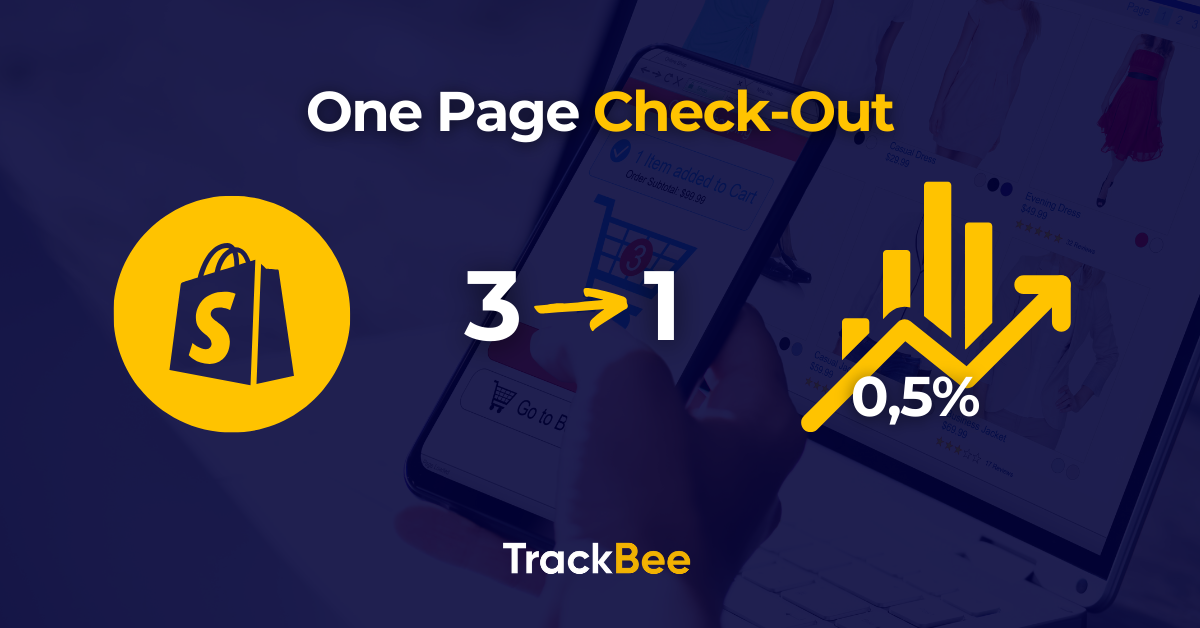
Shopify replaced its three-step checkout with a single-page checkout experience. The promise: fewer steps, faster completion, higher conversion rates.
Shopify's own data suggests a 0.5% average conversion rate improvement from the switch. For a store doing $100,000 a month, that's $500/month in additional revenue from a checkout architecture change - with no creative testing, no ad spend increase, and no product changes.
But the one-page checkout also introduces tradeoffs worth understanding - particularly around abandoned cart flows, upsell opportunities, and tracking. This guide covers both sides.
What Is Shopify's One-Page Checkout?
Traditional Shopify checkout had three steps:
-
Contact information (email, phone)
-
Shipping information (address)
-
Payment information
Each step was on a separate page. Customers clicked "Continue" to advance. This three-step structure has been standard in e-commerce for years.
Shopify's one-page checkout consolidates all three steps into a single page. Customers see and complete their contact information, shipping address, and payment details simultaneously - then place their order.
For returning customers (logged into Shop account or with browser autofill available), the checkout is even faster: fields pre-fill automatically, reducing the interaction to a review and confirmation.
The Benefits: Why It Improves Conversions
Fewer clicks to completion Every page transition in checkout is an opportunity for a customer to reconsider, get distracted, or experience a technical failure. Eliminating two page transitions reduces the number of potential exit points.
Reduced perceived complexity A checkout that shows everything on one page can feel less daunting than a multi-step process of unknown length. Progress indicators on multi-page checkouts help with this, but one-page simply eliminates the ambiguity.
Faster mobile checkout On mobile, page-to-page navigation with form re-rendering is noticeable. A single-page checkout with smooth in-page form interaction typically feels faster and more fluid on mobile devices - where the majority of Shopify traffic originates.
Shop Pay acceleration Customers logged into Shop accounts get their information pre-filled regardless of checkout format, but the one-page checkout's autofill works particularly well with Shop Pay's accelerated checkout - reducing checkout to a few taps.
Shopify's data: Shopify reports an average 0.5% conversion rate improvement for merchants who switched to one-page checkout. This is an average - some stores will see more, some less, depending on their existing checkout experience and customer base.
The Tradeoffs: What Changes for Your Store
Fewer Opportunities for Mid-Checkout Engagement
The three-step checkout created natural pauses between steps. Some stores used these pause points - brief moments where the customer was waiting for the next page to load or reviewing their information - to show social proof, security badges, or promotional messaging.
One-page checkout compresses these moments. There's less real estate for mid-checkout messaging because everything needs to fit on one page without overwhelming the primary goal (completing the purchase).
Potential Design Complexity
A well-designed one-page checkout presents a clean, scannable experience. A poorly designed one-page checkout becomes visually dense - cramming too much content into a single view. The conversion gain from reducing steps can be partially offset if the page itself becomes overwhelming.
Shopify's default one-page checkout is well-designed and mobile-optimized. If you have extensive Shopify Plus checkout customizations, review them after enabling one-page to ensure the design still works.
Changes to Abandoned Cart Flow Triggers
This is the most important operational consideration, and it's worth understanding clearly.
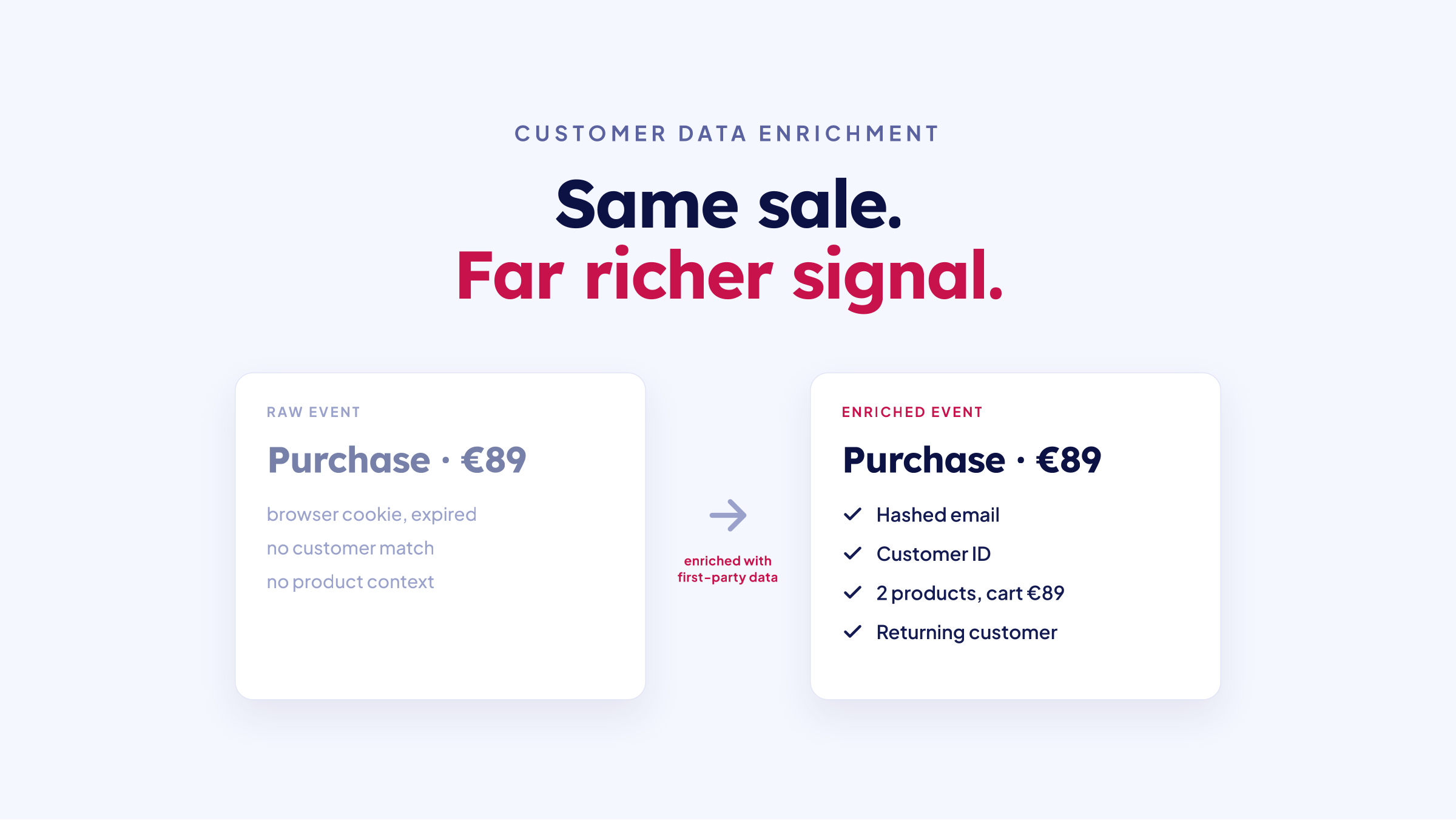
In the three-step checkout, a customer who completed Step 1 (contact information, including their email) had their email captured before reaching the payment step. This meant Klaviyo could identify that customer even if they abandoned at Steps 2 or 3.
In the one-page checkout, all information is entered simultaneously. A customer who fills in their email but doesn't complete the order has typically still provided enough information to trigger an abandoned cart flow - but the timing of when that information becomes available to Klaviyo may differ slightly from the multi-step flow.
In practice: Shopify's server-side data capture (which is what TrackBee uses) records order intent regardless of the checkout layout. Abandoned cart tracking that runs server-side is not affected by the switch from three-step to one-page checkout. The customer's email is captured when they enter it, and that data is available for flow triggering.
Impact on Abandoned Cart Flows and Tracking
The concern some merchants have: In a three-step checkout, email was captured on Step 1. If a customer abandoned on Step 2 or 3, their email was already in the system - Klaviyo knew who they were and could send an abandoned cart email.
With one-page checkout, there's a theoretical risk that customers who start typing and then abandon before submitting might not trigger the flow.
The reality: Klaviyo's "Started Checkout" event triggers when a customer initiates checkout - not when they complete it. Email capture happens as the customer types their email address, not only when they submit the form. Modern e-commerce tracking is designed for this.
The much larger tracking issue - which affects both three-step and one-page checkout equally - is whether the "Started Checkout" event reaches Klaviyo at all. Ad blockers, iOS restrictions, and cross-device journeys mean that a significant percentage of checkout initiations never trigger Klaviyo flows, regardless of checkout layout.
The fix for that problem is server-side tracking - not checkout layout. TrackBee captures checkout events server-side from Shopify's backend, independent of browser conditions and checkout structure. See: How to improve your Klaviyo abandoned cart flow.
Impact on Upsell and Cross-Sell Strategies
The three-step checkout provided natural post-step moments for upsell placements. One-page checkout removes these in-checkout pause points.
What doesn't change:
-
Post-purchase upsells (shown after order confirmation) are unaffected - these happen on the thank you page regardless of checkout format
-
Pre-checkout upsells on the cart page are unaffected
-
Klaviyo post-purchase flows are unaffected
What changes:
-
In-checkout upsell apps that inserted content between checkout steps will need to be reviewed for compatibility with one-page checkout
-
Cart page upsells become more important as the primary in-funnel cross-sell opportunity before checkout begins
Stores that rely heavily on mid-checkout upsell revenue should audit their upsell apps and strategy before or immediately after switching.
How to Enable One-Page Checkout
Shopify's one-page checkout is available to all Shopify plans (not just Shopify Plus). It became the default checkout for new stores. For existing stores on the older multi-step checkout:
-
In Shopify Admin, go to Settings > Checkout
-
Under Checkout layout, select One-page checkout
-
Review your checkout customizations (if any) for compatibility
-
Save
If you're on Shopify Plus with heavy checkout customizations, test thoroughly before switching in production - use a development store or run a brief A/B test if possible.
Is One-Page Checkout Right for Your Store?
Cases where one-page checkout is clearly beneficial:
-
Your primary revenue driver is straightforward product purchases with standard checkout
-
Mobile traffic is a significant share of your orders
-
You don't have complex mid-checkout upsell flows that depend on multi-step structure
-
Your existing checkout abandonment rate is high and you want a quick structural improvement
Cases where more careful evaluation is warranted:
-
You have Shopify Plus checkout customizations that are deeply integrated with your marketing stack
-
You rely heavily on mid-checkout upsell apps that may not support one-page layout
-
Your checkout includes complex conditional logic (B2B pricing, multiple shipping options) that may render differently on one page
For most standard DTC Shopify stores, the conversion rate improvement from switching to one-page checkout is likely positive - and the tradeoffs are manageable.
Frequently Asked Questions
Does one-page checkout affect my Google Analytics or Meta tracking? Checkout layout changes can affect how GA4 and Meta track checkout progression events. If you're tracking "checkout step" events (begin checkout, add payment info), verify that your tracking events still fire correctly after switching. Server-side tracking (TrackBee) is not affected by checkout layout changes - conversion events are captured from Shopify's backend regardless.
Will switching to one-page checkout break my Klaviyo flows? It shouldn't, but you should monitor your Klaviyo "Started Checkout" event volume for 48–72 hours after switching to confirm no unexpected drop. If you see a significant drop, investigate your checkout tracking setup.
Can I A/B test one-page vs. three-step checkout? Shopify doesn't natively offer A/B testing for checkout layouts. Some Shopify Plus stores can configure this through Shopify's APIs, but it's technically complex. For most stores, the 0.5% conversion rate improvement Shopify reports is substantial enough to justify switching without a dedicated test.
Does Shop Pay still work with one-page checkout? Yes. Shop Pay is fully compatible with one-page checkout and works particularly well - pre-filling customer information seamlessly within the single-page layout.
Are there apps that add upsell features to one-page checkout? Yes. Apps like ReConvert and Zipify are updated to support one-page checkout's structure. Review your existing upsell apps' documentation for compatibility before switching.


.png)