Shopify Abandoned Cart Discount: Best Strategies

Abandoned cart discounts recover sales - but only with correct tracking. Learn how to structure discounts, timing, and flows that convert.
March 18, 2026
Frank
Latest
Shopify

Shopify Abandoned Cart Discount: Best Strategies

An abandoned cart discount is one of the most effective recovery tools in e-commerce. A customer who added products to their cart and reached checkout has already demonstrated strong purchase intent. The right incentive, delivered at the right moment, converts a meaningful percentage of those abandoners into buyers.

But there's a problem most stores don't account for: before optimizing what's inside your abandoned cart emails, you need to ensure those emails are actually triggering. A substantial portion of cart abandonment events never reach Klaviyo - and no discount strategy fixes a flow that isn't firing.

This guide covers both: how to structure abandoned cart discounts for maximum effectiveness, and how to ensure the tracking foundation that makes those discounts reach the right people.

Why Offer a Discount for Abandoned Carts?

Cart abandonment rates average 65–80% in e-commerce. That means for every 10 customers who reach checkout, 6–8 leave without purchasing.

The reasons vary: unexpected shipping costs, second thoughts, comparison shopping, or simple distraction. A discount addresses multiple of these at once: it reduces the effective price (countering sticker shock), creates a reason to return (a time-limited offer), and signals that you want their business.

The economics: An abandoned cart email sequence without discounts typically recovers 2–5% of abandoned carts. Adding a strategic discount offer in a later email in the sequence can push recovery rates to 5–10%. On a store doing 500 abandoned carts per month at an average order value of €80, recovering an additional 2.5% means 12–13 additional orders per month - €960–€1,040 in recovered revenue from adding one discount email.

When not to offer discounts: Discounts have a cost. If your margins are thin, a 10% discount may not be worth the recovered order. And training customers to abandon carts in anticipation of a discount (if your discount pattern is predictable) creates long-term margin erosion. The strategies below address how to minimize these risks.


The Tracking Problem You Need to Fix First

Before spending time on discount strategy, address this: a significant percentage of cart abandonment events never reach your email platform.

A blurred image of a discount code for a Shopify store aimed at reducing cart abandonment.

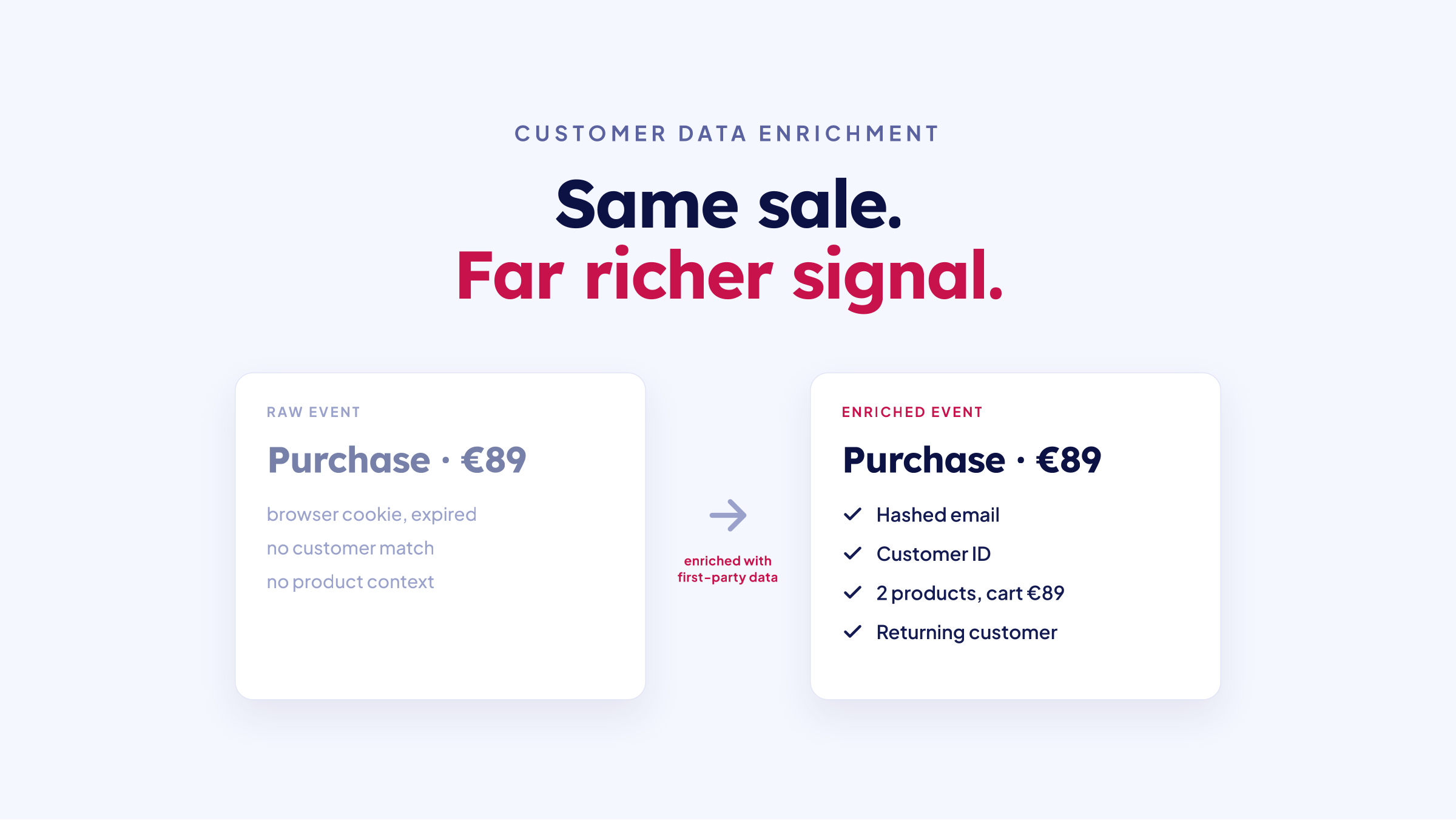
What's happening: Your Klaviyo abandoned cart flow triggers on "Started Checkout" or "Added to Cart" events. These events are sent by tracking scripts running in your customers' browsers. When those scripts don't fire - because of ad blockers, iOS restrictions, expired cookies, or cross-device journeys - Klaviyo receives nothing. No trigger. No email. No chance to recover that sale.

HoneyBalm discovered this: they were missing 74% of their Add to Cart events. Their abandoned cart flow was triggering for less than 30% of the actual abandonment events in their store.

The fix is server-side event capture - recording cart events at the server level, independent of browser conditions, and sending them to Klaviyo with customer identity attached. This doesn't require changing your email sequence or your discount strategy. It just ensures your existing flow actually fires.

After fixing the tracking root cause, HoneyBalm saw:

  • +171% more Add to Cart events in Klaviyo

  • +220% more abandoned cart flow triggers

  • +213% more abandonment revenue

None of that came from changing the email content. It came from ensuring the emails were actually sending. See: How to improve your Klaviyo abandoned cart flow.


Discount Strategy: When to Offer and When Not to

Not every abandoned cart needs a discount. A three-email sequence allows for a graduated approach:

Email 1 (30 minutes after abandonment): No discount The customer just left. They may still be shopping or were simply interrupted. A friendly reminder with their cart contents - no incentive, no urgency - recovers the easiest segment at full margin.

Email 2 (24 hours after abandonment): Optional soft incentive For non-openers of Email 1, or customers who opened but didn't return. Consider a value-add (free shipping if they're not already eligible) rather than a percentage discount. Free shipping feels less like a "price cut" and has high perceived value relative to its cost.

Email 3 (48–72 hours after abandonment): Targeted discount For customers who haven't responded to the first two emails. This is where a conditional discount makes sense - but only for higher-value carts where the margin supports it.

Conditional discount logic: Use Klaviyo's conditional content blocks to apply discounts only when the cart value exceeds a threshold. A 10% discount on a €25 cart costs €2.50. A 10% discount on a €150 cart costs €15. Apply discounts where they move the needle - on carts large enough that the recovered revenue justifies the margin cost.


How to Set Up Abandoned Cart Discount Codes in Shopify

Creating the discount code:

  1. In Shopify Admin, go to Discounts

  2. Click Create Discount and select the type (percentage, fixed amount, or free shipping)

  3. Set the discount value

  4. Under eligibility, you can target specific customers, products, or collections

  5. Set a minimum cart value requirement if using conditional logic

  6. Set an expiration date (creates urgency) - typically 48–72 hours after the email sends

Using Klaviyo's unique coupon codes: Rather than a shared code (which customers can share or use repeatedly), Klaviyo can generate unique one-time-use codes for each abandoned cart email. This prevents code sharing and allows you to track exactly which recovered orders came from which email.

In Klaviyo: Flow > Action > Add Block > Dynamic Coupon Code. Connect your Shopify coupon prefix, and Klaviyo generates unique codes per send.

Automating discount delivery: In Klaviyo's flow builder, add a Coupon Code content block to your Email 3 template. The code appears automatically for each recipient without manual intervention.


Email Sequence Structure and Timing

The standard three-email abandoned cart sequence:
An illustration of free shipping offers for an online store, promoting discounts and cart completion.

Email 1 - Reminder (30 minutes post-abandonment)

  • Subject line: Direct and non-promotional ("You left something in your cart")

  • Content: Dynamic product block showing abandoned items (image, name, price, variant), direct CTA ("Return to Cart"), no discount

  • Goal: Recover easy-to-convert abandoners at full margin

Email 2 - Follow-up (24 hours post-abandonment)

  • Subject line: Product-specific ("Your [product name] is still waiting")

  • Content: Cart reminder, social proof (reviews or ratings for the specific products), optionally: free shipping offer

  • Filter: Only send to non-purchasers since Email 1

  • Goal: Catch customers who needed more time to decide

Email 3 - Final nudge (48–72 hours post-abandonment)

  • Subject line: Urgency or incentive ("Here's 10% off - expires in 48 hours")

  • Content: Cart reminder, conditional discount code (for carts above threshold), explicit urgency about offer expiration

  • Filter: Only send to non-purchasers since Email 1 and 2

  • Goal: Convert fence-sitters with a concrete incentive

For high-value stores (average cart €200+): A fourth email (5–7 days post-abandonment) with a more substantial offer can add incremental recovery from customers who've had more time to consider. The drop-off in intent over time means this email typically has lower conversion rates - it works best when the offer is meaningfully compelling.


Email Design and Content Best Practices

Dynamic product blocks: Your abandoned cart email should show exactly what the customer left behind. Klaviyo's catalog integration enables dynamic product blocks that pull the actual product image, name, price, and variant (size, color) from the abandonment event. This is table stakes - emails without specific product information underperform.

The "Return to Cart" CTA: Make it prominent, specific, and action-oriented. "Return to Cart" outperforms generic CTAs like "Shop Now" or "Visit Us" because it's specific to where the customer was in their journey. The link should return them directly to their cart, pre-populated - not to your homepage.

Social proof: Product-specific reviews and ratings reduce purchase hesitation. If the abandoned product has strong reviews, include them. A 4.8-star review for the exact product they were considering is more persuasive than generic brand testimonials.

Mobile design: 40–45% of abandoned cart emails are opened on mobile. Single-column layouts, large tap targets, and minimum 16px body font size are baseline requirements.


Personalization Tactics That Increase Open Rates

Open rates for abandoned cart emails are significantly higher than typical promotional emails - 40–45% versus 15–20% - because the content is inherently relevant to the recipient.

Personalization pushes this further:

Subject line personalization:

  • Include the product name: "[Product name] is waiting for you"

  • Include the customer's first name: "Hey [First name], you forgot something"

  • Test both against a non-personalized control to measure the lift for your specific audience

Cart-value-based messaging: Different cart values warrant different tones. A €15 cart abandoned: casual, low-pressure tone. A €300 cart abandoned: reassuring tone that addresses potential hesitations (shipping policy, return policy, product quality).

Time-sensitive social proof: "3 others are looking at this right now" creates urgency through social proof rather than artificial scarcity. Works for products with genuinely limited inventory.


Creating Urgency Without Desperation

Urgency is effective when it's genuine. Fake scarcity ("Only 2 left!" for an item you have 500 of) erodes trust when customers see through it - and they often do.

Legitimate urgency tactics:

Limited-time discount expiration: If you're offering a discount in Email 3, a genuine expiration date (48–72 hours) creates real urgency. Make the expiration explicit in both the subject line and the email body.

Actual inventory scarcity: If you genuinely have limited stock, show it. Klaviyo can display real inventory levels via your Shopify product catalog. "Only 3 left in size M" is compelling when it's true.

Seasonal relevance: "Order by [date] for delivery before [holiday]" creates urgency tied to a real deadline. Works especially well during Q4.

What to avoid:

  • Generic "hurry" language without a specific reason

  • Countdown timers that reset each time the customer opens the email (technically a lie)

  • Scarcity claims for products that are obviously not scarce


Retargeting Abandoners Across Channels

Email isn't the only recovery channel. A multi-channel approach reaches abandoners who ignore emails:

Meta retargeting: Create a Custom Audience in Meta of visitors who triggered your "Started Checkout" event but didn't purchase. Show them ads featuring the products they abandoned.

This requires accurate event data - the same tracking gaps that affect your Klaviyo flows also affect your Meta retargeting audiences. Server-side event capture ensures this audience is populated correctly. See: How to stop wasting Meta ad budget on returning customers.

SMS recovery: For customers who've opted into SMS, a single SMS shortly after abandonment outperforms email on open rate (90%+ vs. 40–45%). Keep it direct: "[First name], your cart is waiting. Complete your order here: [link]." No discount needed in the first SMS touch.

Push notifications: Browser push notifications achieve up to 50% open rates and work for anonymous users who haven't provided an email. Limited to users who've opted in to push - but for stores that have activated push, it's an effective recovery channel.


Frequently Asked Questions

How do I create a discount code for abandoned carts in Shopify? Go to Discounts in Shopify Admin, click Create Discount, choose your discount type and value, set minimum cart value requirements, and set an expiration period. For unique per-user codes in Klaviyo flows, use Klaviyo's Dynamic Coupon Code feature connected to your Shopify discount prefix.

Should I offer a discount in every abandoned cart email? No. A graduated approach - reminder first, incentive last - preserves margins and avoids training customers to abandon carts in anticipation of a discount. Offer discounts conditionally (higher-value carts) and in later emails only.

What abandoned cart discount percentage should I offer? 10–15% off is the most common range. Free shipping is often more appealing than a percentage discount for carts where shipping cost was the abandonment trigger. Test both for your specific audience.

How do I track whether my abandoned cart emails are working? In Klaviyo, check your flow analytics for Email Sent, Opened, Clicked, and Converted metrics. Also check the Klaviyo "Started Checkout" event volume against your Shopify "Reached Checkout" volume - if there's a large gap, you have a tracking problem to fix before optimizing email strategy.

Why are my abandoned cart emails not sending? The most common cause: the "Started Checkout" event isn't reaching Klaviyo for a large portion of your abandoners. Check your Klaviyo event volume and compare it to Shopify's checkout data. If you see a significant gap, the solution is server-side event capture - not email flow changes.

In this article
Boost Your Revenue
Track Missing Conversion Data
Lorem Ipsum

Boost Your Revenue

Track & Enrich
Missing Conversion Data

Try for free
Share this:

An abandoned cart discount is one of the most effective recovery tools in e-commerce. A customer who added products to their cart and reached checkout has already demonstrated strong purchase intent. The right incentive, delivered at the right moment, converts a meaningful percentage of those abandoners into buyers.

But there's a problem most stores don't account for: before optimizing what's inside your abandoned cart emails, you need to ensure those emails are actually triggering. A substantial portion of cart abandonment events never reach Klaviyo - and no discount strategy fixes a flow that isn't firing.

This guide covers both: how to structure abandoned cart discounts for maximum effectiveness, and how to ensure the tracking foundation that makes those discounts reach the right people.

Why Offer a Discount for Abandoned Carts?

Cart abandonment rates average 65–80% in e-commerce. That means for every 10 customers who reach checkout, 6–8 leave without purchasing.

The reasons vary: unexpected shipping costs, second thoughts, comparison shopping, or simple distraction. A discount addresses multiple of these at once: it reduces the effective price (countering sticker shock), creates a reason to return (a time-limited offer), and signals that you want their business.

The economics: An abandoned cart email sequence without discounts typically recovers 2–5% of abandoned carts. Adding a strategic discount offer in a later email in the sequence can push recovery rates to 5–10%. On a store doing 500 abandoned carts per month at an average order value of €80, recovering an additional 2.5% means 12–13 additional orders per month - €960–€1,040 in recovered revenue from adding one discount email.

When not to offer discounts: Discounts have a cost. If your margins are thin, a 10% discount may not be worth the recovered order. And training customers to abandon carts in anticipation of a discount (if your discount pattern is predictable) creates long-term margin erosion. The strategies below address how to minimize these risks.


The Tracking Problem You Need to Fix First

Before spending time on discount strategy, address this: a significant percentage of cart abandonment events never reach your email platform.

A blurred image of a discount code for a Shopify store aimed at reducing cart abandonment.

What's happening: Your Klaviyo abandoned cart flow triggers on "Started Checkout" or "Added to Cart" events. These events are sent by tracking scripts running in your customers' browsers. When those scripts don't fire - because of ad blockers, iOS restrictions, expired cookies, or cross-device journeys - Klaviyo receives nothing. No trigger. No email. No chance to recover that sale.

HoneyBalm discovered this: they were missing 74% of their Add to Cart events. Their abandoned cart flow was triggering for less than 30% of the actual abandonment events in their store.

The fix is server-side event capture - recording cart events at the server level, independent of browser conditions, and sending them to Klaviyo with customer identity attached. This doesn't require changing your email sequence or your discount strategy. It just ensures your existing flow actually fires.

After fixing the tracking root cause, HoneyBalm saw:

  • +171% more Add to Cart events in Klaviyo

  • +220% more abandoned cart flow triggers

  • +213% more abandonment revenue

None of that came from changing the email content. It came from ensuring the emails were actually sending. See: How to improve your Klaviyo abandoned cart flow.


Discount Strategy: When to Offer and When Not to

Not every abandoned cart needs a discount. A three-email sequence allows for a graduated approach:

Email 1 (30 minutes after abandonment): No discount The customer just left. They may still be shopping or were simply interrupted. A friendly reminder with their cart contents - no incentive, no urgency - recovers the easiest segment at full margin.

Email 2 (24 hours after abandonment): Optional soft incentive For non-openers of Email 1, or customers who opened but didn't return. Consider a value-add (free shipping if they're not already eligible) rather than a percentage discount. Free shipping feels less like a "price cut" and has high perceived value relative to its cost.

Email 3 (48–72 hours after abandonment): Targeted discount For customers who haven't responded to the first two emails. This is where a conditional discount makes sense - but only for higher-value carts where the margin supports it.

Conditional discount logic: Use Klaviyo's conditional content blocks to apply discounts only when the cart value exceeds a threshold. A 10% discount on a €25 cart costs €2.50. A 10% discount on a €150 cart costs €15. Apply discounts where they move the needle - on carts large enough that the recovered revenue justifies the margin cost.


How to Set Up Abandoned Cart Discount Codes in Shopify

Creating the discount code:

  1. In Shopify Admin, go to Discounts

  2. Click Create Discount and select the type (percentage, fixed amount, or free shipping)

  3. Set the discount value

  4. Under eligibility, you can target specific customers, products, or collections

  5. Set a minimum cart value requirement if using conditional logic

  6. Set an expiration date (creates urgency) - typically 48–72 hours after the email sends

Using Klaviyo's unique coupon codes: Rather than a shared code (which customers can share or use repeatedly), Klaviyo can generate unique one-time-use codes for each abandoned cart email. This prevents code sharing and allows you to track exactly which recovered orders came from which email.

In Klaviyo: Flow > Action > Add Block > Dynamic Coupon Code. Connect your Shopify coupon prefix, and Klaviyo generates unique codes per send.

Automating discount delivery: In Klaviyo's flow builder, add a Coupon Code content block to your Email 3 template. The code appears automatically for each recipient without manual intervention.


Email Sequence Structure and Timing

The standard three-email abandoned cart sequence:

An illustration of free shipping offers for an online store, promoting discounts and cart completion.

Email 1 - Reminder (30 minutes post-abandonment)

  • Subject line: Direct and non-promotional ("You left something in your cart")

  • Content: Dynamic product block showing abandoned items (image, name, price, variant), direct CTA ("Return to Cart"), no discount

  • Goal: Recover easy-to-convert abandoners at full margin

Email 2 - Follow-up (24 hours post-abandonment)

  • Subject line: Product-specific ("Your [product name] is still waiting")

  • Content: Cart reminder, social proof (reviews or ratings for the specific products), optionally: free shipping offer

  • Filter: Only send to non-purchasers since Email 1

  • Goal: Catch customers who needed more time to decide

Email 3 - Final nudge (48–72 hours post-abandonment)

  • Subject line: Urgency or incentive ("Here's 10% off - expires in 48 hours")

  • Content: Cart reminder, conditional discount code (for carts above threshold), explicit urgency about offer expiration

  • Filter: Only send to non-purchasers since Email 1 and 2

  • Goal: Convert fence-sitters with a concrete incentive

For high-value stores (average cart €200+): A fourth email (5–7 days post-abandonment) with a more substantial offer can add incremental recovery from customers who've had more time to consider. The drop-off in intent over time means this email typically has lower conversion rates - it works best when the offer is meaningfully compelling.


Email Design and Content Best Practices

Dynamic product blocks: Your abandoned cart email should show exactly what the customer left behind. Klaviyo's catalog integration enables dynamic product blocks that pull the actual product image, name, price, and variant (size, color) from the abandonment event. This is table stakes - emails without specific product information underperform.

The "Return to Cart" CTA: Make it prominent, specific, and action-oriented. "Return to Cart" outperforms generic CTAs like "Shop Now" or "Visit Us" because it's specific to where the customer was in their journey. The link should return them directly to their cart, pre-populated - not to your homepage.

Social proof: Product-specific reviews and ratings reduce purchase hesitation. If the abandoned product has strong reviews, include them. A 4.8-star review for the exact product they were considering is more persuasive than generic brand testimonials.

Mobile design: 40–45% of abandoned cart emails are opened on mobile. Single-column layouts, large tap targets, and minimum 16px body font size are baseline requirements.


Personalization Tactics That Increase Open Rates

Open rates for abandoned cart emails are significantly higher than typical promotional emails - 40–45% versus 15–20% - because the content is inherently relevant to the recipient.

Personalization pushes this further:

Subject line personalization:

  • Include the product name: "[Product name] is waiting for you"

  • Include the customer's first name: "Hey [First name], you forgot something"

  • Test both against a non-personalized control to measure the lift for your specific audience

Cart-value-based messaging: Different cart values warrant different tones. A €15 cart abandoned: casual, low-pressure tone. A €300 cart abandoned: reassuring tone that addresses potential hesitations (shipping policy, return policy, product quality).

Time-sensitive social proof: "3 others are looking at this right now" creates urgency through social proof rather than artificial scarcity. Works for products with genuinely limited inventory.


Creating Urgency Without Desperation

Urgency is effective when it's genuine. Fake scarcity ("Only 2 left!" for an item you have 500 of) erodes trust when customers see through it - and they often do.

Legitimate urgency tactics:

Limited-time discount expiration: If you're offering a discount in Email 3, a genuine expiration date (48–72 hours) creates real urgency. Make the expiration explicit in both the subject line and the email body.

Actual inventory scarcity: If you genuinely have limited stock, show it. Klaviyo can display real inventory levels via your Shopify product catalog. "Only 3 left in size M" is compelling when it's true.

Seasonal relevance: "Order by [date] for delivery before [holiday]" creates urgency tied to a real deadline. Works especially well during Q4.

What to avoid:

  • Generic "hurry" language without a specific reason

  • Countdown timers that reset each time the customer opens the email (technically a lie)

  • Scarcity claims for products that are obviously not scarce


Retargeting Abandoners Across Channels

Email isn't the only recovery channel. A multi-channel approach reaches abandoners who ignore emails:

Meta retargeting: Create a Custom Audience in Meta of visitors who triggered your "Started Checkout" event but didn't purchase. Show them ads featuring the products they abandoned.

This requires accurate event data - the same tracking gaps that affect your Klaviyo flows also affect your Meta retargeting audiences. Server-side event capture ensures this audience is populated correctly. See: How to stop wasting Meta ad budget on returning customers.

SMS recovery: For customers who've opted into SMS, a single SMS shortly after abandonment outperforms email on open rate (90%+ vs. 40–45%). Keep it direct: "[First name], your cart is waiting. Complete your order here: [link]." No discount needed in the first SMS touch.

Push notifications: Browser push notifications achieve up to 50% open rates and work for anonymous users who haven't provided an email. Limited to users who've opted in to push - but for stores that have activated push, it's an effective recovery channel.


Frequently Asked Questions

How do I create a discount code for abandoned carts in Shopify? Go to Discounts in Shopify Admin, click Create Discount, choose your discount type and value, set minimum cart value requirements, and set an expiration period. For unique per-user codes in Klaviyo flows, use Klaviyo's Dynamic Coupon Code feature connected to your Shopify discount prefix.

Should I offer a discount in every abandoned cart email? No. A graduated approach - reminder first, incentive last - preserves margins and avoids training customers to abandon carts in anticipation of a discount. Offer discounts conditionally (higher-value carts) and in later emails only.

What abandoned cart discount percentage should I offer? 10–15% off is the most common range. Free shipping is often more appealing than a percentage discount for carts where shipping cost was the abandonment trigger. Test both for your specific audience.

How do I track whether my abandoned cart emails are working? In Klaviyo, check your flow analytics for Email Sent, Opened, Clicked, and Converted metrics. Also check the Klaviyo "Started Checkout" event volume against your Shopify "Reached Checkout" volume - if there's a large gap, you have a tracking problem to fix before optimizing email strategy.

Why are my abandoned cart emails not sending? The most common cause: the "Started Checkout" event isn't reaching Klaviyo for a large portion of your abandoners. Check your Klaviyo event volume and compare it to Shopify's checkout data. If you see a significant gap, the solution is server-side event capture - not email flow changes.

Latest

Discover other Blogs

Explore our collection of informative and engaging blog posts.

Why Your Shopify Sales Don't Match Meta and Google Ads
Frank
Frank
9
min read
Shopify Conversion Rate Drop? Check Your Tracking
Frank
Frank
10
min read
How to Fix Underreported Conversions on Shopify
Frank
Frank
10
min read